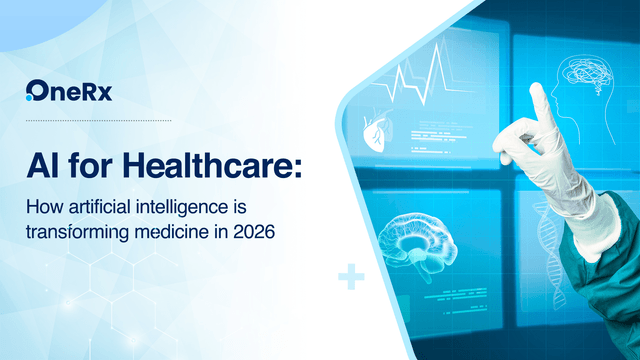
AI Technology in Healthcare: The Latest Innovations Transforming Patient Care in 2026
It is easy to reduce AI technology in healthcare to a list of tools — algorithms, models, platforms. But that framing misses what is actually happening. What is underway is a fundamental restructuring of how clinical information is captured, processed, and translated into action. The latest AI healthcare technology is not adding a new layer onto existing healthcare processes. It is rebuilding those processes from the ground up.
The pace of change is significant. Machine learning healthcare applications that were in research trials three years ago are now in clinical deployment. Healthcare automation that once required years of IT implementation is now achievable through cloud-based, API-driven integrations. Predictive analytics healthcare tools that were the exclusive domain of large academic centres are now accessible to community hospitals and primary care networks.
This article takes a clear-eyed look at the AI technology in healthcare landscape in 2026: what the key technologies are, how they work, where they are delivering value, and what the trajectory looks like over the next five years. We also look at how OneRx is applying AI technology in healthcare specifically to oncology and medical affairs — a domain where the complexity of clinical decision-making demands something more sophisticated than generic AI tools.
What is AI Technology in Healthcare?
AI technology in healthcare is an umbrella term covering multiple distinct technologies, each with different applications and underlying mechanisms. Understanding these distinctions matters — because 'AI' is not one thing, and different technologies are suited to different clinical problems.
The primary AI technologies currently deployed in healthcare settings are:
- Machine learning — algorithms that learn patterns from data without explicit programming, used for prediction, classification, and risk stratification across clinical applications
- Deep learning — a subset of machine learning using multi-layered neural networks, particularly powerful for analysing medical imaging, genomic sequences, and complex unstructured data
- Natural language processing healthcare (NLP) — algorithms that extract structured information from unstructured clinical text, enabling automation of documentation, coding, and clinical data extraction
- Computer vision — AI systems that analyse visual data, including medical imaging, pathology slides, and clinical photographs, to detect and classify disease
- Predictive analytics healthcare — statistical and ML models that use historical patient data to forecast future clinical events — deterioration, readmission, disease progression, treatment response
- Robotic process automation (RPA) — healthcare automation of repetitive administrative workflows including prior authorisation, claims processing, appointment scheduling, and coding
What connects these technologies is the shared ability to process health data at a scale, speed, and consistency that exceeds human capacity — and to surface insights that improve clinical or operational outcomes.
How AI Technology in Healthcare Works
Data Infrastructure
Every AI technology in healthcare application begins with data. Electronic health records are the primary source — but meaningful AI requires aggregation across multiple data types: imaging, genomics, laboratory results, claims, wearables, and clinical text. The fragmentation of health data across incompatible systems is the single biggest structural barrier to deploying the latest AI healthcare technology at scale.
Platforms that have solved this integration challenge — building the data pipelines, standardisation frameworks, and interoperability infrastructure to aggregate multi-source clinical data — have a structural advantage in building reliable health AI.
Model Training and Validation
Machine learning healthcare models learn from labelled training data — historical clinical records annotated with outcomes, diagnoses, or clinical events. The quality of the trained model depends entirely on the quality, diversity, and representativeness of the training data.
Validation is equally critical. AI technology in healthcare must be validated not just on held-out portions of the training dataset, but on prospective clinical data from diverse populations and settings — before deployment in clinical practice. Retrospective performance in a training dataset tells you little about how a model will perform in the real world.
Healthcare Automation Pipelines
Healthcare automation through AI typically involves building automated pipelines that connect data sources, AI models, and clinical systems — so that insights are surfaced automatically, without requiring manual data entry or system switching from clinicians. The technical challenge of building robust, monitored, and auditable healthcare automation pipelines at scale is significant — and is a core capability differentiator among AI technology in healthcare platforms.
Key AI Technologies Transforming Healthcare in 2026
Large Language Models (LLMs) in Clinical Settings
The emergence of large language models has significantly expanded the scope of natural language processing healthcare applications. LLMs trained on clinical corpora can draft clinical notes, generate discharge summaries, answer clinical questions from medical literature, and support clinical coding — with accuracy that is increasingly competitive with specialist review in controlled settings.
The challenge is reliability. LLMs can hallucinate — generating plausible-sounding but factually incorrect clinical information. Deploying LLMs in clinical settings requires robust guardrails, uncertainty quantification, and human-in-the-loop verification for high-stakes outputs. The latest AI healthcare technology in this space is moving rapidly toward clinically validated, hallucination-mitigated LLM applications.
Predictive Analytics for Patient Safety
Predictive analytics healthcare tools continuously monitor patient data — vital signs, laboratory trends, medication administration, clinical documentation — to identify early warning signals for deterioration, sepsis, acute kidney injury, and other time-critical events. These tools are in clinical deployment in ICUs, surgical wards, and emergency departments globally, and have demonstrated mortality benefit in well-designed implementation studies.
The AI technology in healthcare underpinning these systems is typically ensemble ML models trained on large retrospective datasets, with continuous monitoring for model drift and performance degradation over time.
Generative AI for Drug Discovery
Machine learning healthcare applications in pharmaceutical R&D are accelerating target identification, virtual screening, and de novo compound design at a pace that was not achievable with conventional computational chemistry. Generative AI models can design novel molecular structures with specific target binding characteristics — compressing early-stage drug discovery timelines from years to months.
AI-Powered Healthcare Automation in Administration
A substantial proportion of healthcare cost and clinician time is consumed by administrative processes: prior authorisation, clinical coding, scheduling, documentation, and billing. Healthcare automation through AI is already demonstrating significant efficiency gains in these domains — reducing prior authorisation processing from days to minutes, automating clinical coding from documentation, and using NLP to populate structured fields from clinical notes. [Internal link: AI for Healthcare]
Precision Medicine and Genomic AI
Machine learning healthcare tools for genomic analysis are enabling interpretation of whole-genome and whole-exome sequencing data at clinical scale — identifying pathogenic variants, predicting drug response from pharmacogenomic profiles, and connecting genomic findings to evidence-based treatment options. This is the technological foundation of precision medicine, and it is increasingly deployable in routine clinical oncology practice.
AI Technology in Healthcare: Applications by Setting
Oncology: AI technology in healthcare is transforming oncology across the diagnostic and treatment pathway — from AI-powered imaging analysis and pathology AI, to genomic interpretation, treatment recommendation engines, and real-world evidence synthesis. OneRx is building specifically in this space, combining the latest AI healthcare technology with oncology real-world evidence to deliver specialist clinical decision support. Compared to platforms like Arkangal AI or Glass Health that offer general clinical AI, OneRx targets the specific complexity of oncology decision-making.
Emergency Medicine: Predictive analytics healthcare tools and AI triage systems are in clinical deployment in emergency departments globally — prioritising high-acuity patients, flagging critical imaging findings, and predicting deterioration in patients awaiting assessment. Healthcare automation of documentation in the ED is reducing administrative burden on emergency physicians.
Primary Care: Natural language processing healthcare tools embedded in primary care EHR systems are reducing documentation time by 30–50% in pilot implementations. Predictive analytics tools for chronic disease management are identifying high-risk patients for proactive intervention. Clinical decision support systems are surfacing guideline-concordant recommendations at the point of prescribing.
Pathology and Laboratory Medicine: AI technology in healthcare for digital pathology is enabling automated slide analysis, tumour grading, and molecular subtype classification — at a throughput that addresses the global shortage of specialist pathologists. Machine learning healthcare tools for laboratory result interpretation are flagging patterns associated with specific diagnoses across multi-analyte result sets.
The Future of AI Technology in Healthcare
Foundation Models for Medicine: Multimodal foundation models trained simultaneously on imaging, genomics, clinical text, and structured EHR data will generate integrated clinical insights that no single-modality AI can produce. The next generation of medical AI will be broadly capable across clinical tasks — not narrow models trained for single applications.
Real-Time AI at the Point of Care: The trajectory of AI technology in healthcare is toward real-time, ambient clinical AI — operating in the background during consultations, surfacing recommendations without interrupting the clinical encounter, and continuously learning from clinical outcomes. This is the healthcare AI future that platforms like OneRx are building toward.
AI for Health Equity: Deliberately designed and equitably trained AI technology in healthcare has the potential to reduce health disparities — by improving access to specialist-quality care in underserved settings, detecting health risks earlier in high-risk populations, and personalising care in ways that address individual social determinants of health. Realising this potential requires intentional inclusion of diverse populations in training data and rigorous evaluation of model performance across demographic subgroups.
Interoperability and Open Standards: The AI technology in healthcare ecosystem will mature only when data interoperability is solved. FHIR-based APIs, standardised clinical terminology, and federated data architectures will enable the latest AI healthcare technology to operate across fragmented health IT environments — rather than being siloed within single EHR platforms.
[External link: HL7 FHIR ]
Challenges in AI Technology in Healthcare
Regulatory Complexity: AI technology in healthcare classified as a medical device requires regulatory approval across multiple jurisdictions — FDA, CE, CDSCO, TGA. As the latest AI healthcare technology evolves rapidly, regulatory frameworks are struggling to keep pace, creating uncertainty for developers and health systems deploying AI at scale.
Model Bias and Fairness: Machine learning healthcare models trained on historically biased clinical datasets will replicate those biases in deployment — producing less accurate outputs for underrepresented populations. Addressing bias requires diverse training data, fairness-aware model design, and ongoing monitoring of model performance across demographic subgroups.
Clinical Adoption: AI technology in healthcare delivers value only when clinicians use it. Adoption requires demonstrated clinical validity, transparent methodology, intuitive design, and workflow integration — not just algorithmic performance. Over-engineering AI for technical sophistication at the expense of clinical usability is a common failure mode.
Cybersecurity: Healthcare AI systems that aggregate large volumes of sensitive patient data are high-value targets for cyberattack. Robust cybersecurity frameworks, data encryption, access controls, and incident response plans are non-negotiable for responsible deployment of AI technology in healthcare. [External link: NHS Cyber Security — https://digital.nhs.uk/cyber-and-data-security]
Frequently Asked Questions
Q: What is AI technology in healthcare?
AI technology in healthcare refers to the application of artificial intelligence — including machine learning, deep learning, NLP, computer vision, and predictive analytics — to clinical, operational, and research challenges in health systems. It encompasses everything from AI in diagnostics and clinical decision support to healthcare automation of administrative processes.
Q: What is the latest AI healthcare technology in 2026?
The most significant AI technology in healthcare in 2026 includes large language models for clinical documentation and decision support, multimodal AI for integrated clinical data analysis, advanced predictive analytics healthcare tools for patient safety, AI-powered genomic interpretation for precision medicine, and generative AI for pharmaceutical drug discovery.
Q: How is machine learning used in healthcare?
Machine learning healthcare applications include diagnostic AI for medical imaging and pathology, predictive analytics for patient deterioration and disease progression, NLP for clinical documentation and data extraction, precision medicine tools for genomic analysis, and drug discovery platforms for target identification and compound design.
Q: What is healthcare automation, and how does AI enable it?
Healthcare automation refers to the use of AI and robotic process automation (RPA) to automate repetitive administrative and clinical workflow tasks — including prior authorisation, clinical coding, documentation, scheduling, and billing. AI enables healthcare automation by processing unstructured clinical data (notes, letters, results) at scale, without requiring manual data entry.
Q: How is OneRx applying AI technology in healthcare?
OneRx applies AI technology in healthcare specifically to oncology clinical decision support — integrating machine learning healthcare models, real-world evidence synthesis, and the latest AI healthcare technology into a specialist clinical intelligence platform. Unlike general medical AI platforms like Arkangal AI or Decathlon, OneRx is designed for the specific complexity of oncology decision-making, connecting diagnosis, evidence, and treatment in a single clinician-facing tool.
Conclusion
AI technology in healthcare is not a single innovation — it is a wave of converging capabilities, each maturing at its own pace, each transforming different dimensions of clinical practice and health system operations.
The latest AI healthcare technology is demonstrating real clinical impact: earlier diagnosis, fewer errors, more efficient operations, and more personalised treatment. But realising the full potential of machine learning healthcare requires more than deploying algorithms — it requires solving data integration, clinical adoption, regulatory alignment, and equity challenges that are as much organisational as they are technical.
Platforms like OneRx are approaching this with the specificity that clinical deployment demands: not generic health AI, but oncology-specific AI technology in healthcare that is clinically grounded, evidence-backed, and designed for the workflows of specialist clinicians.